
 English
 中文简体
中文简体Aerodynamic Optimization: Precision Matching Explosion Proof Axial Flow Fan Performance to Industrial Needs
Industry NewsAuthor: Admin
Content
The Science of Air Movement in Hazardous Zones
Beyond Compliance: Engineering Fans for Peak Operational Efficiency
- In complex industrial settings, particularly those categorized as hazardous locations, the
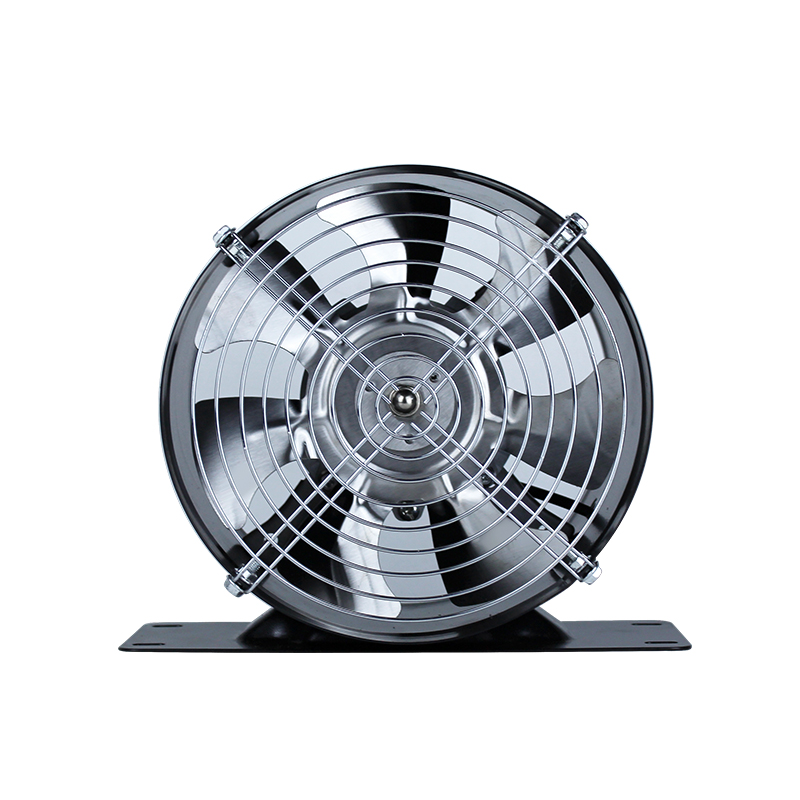
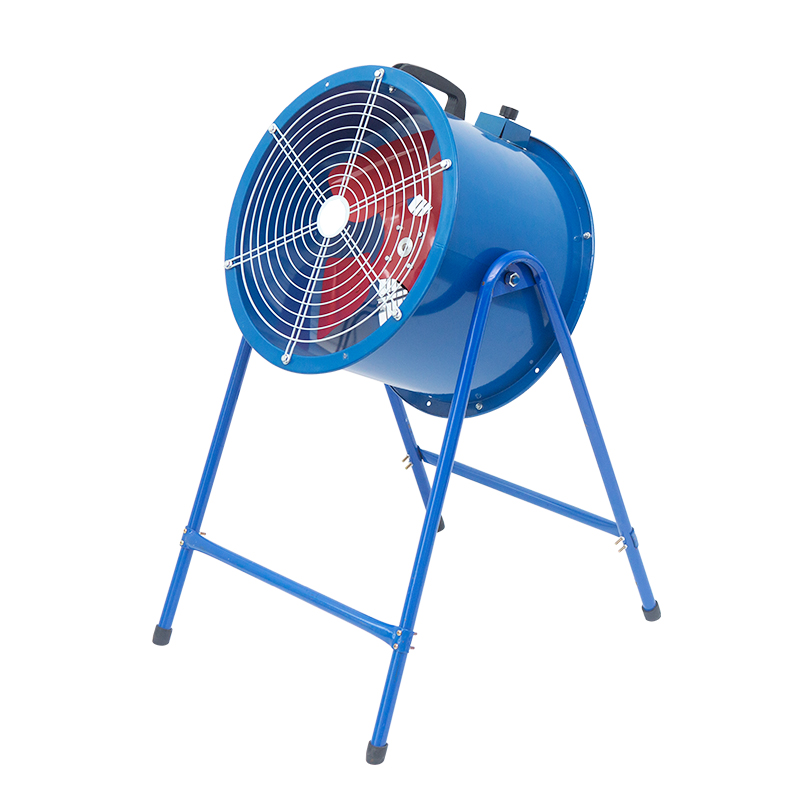
explosion proof axial flow fan is a crucial component responsible for maintaining safe air quality and thermal control. For engineers and B2B buyers, the selection process must transcend mere safety compliance (Ex rating) and focus intensely on aerodynamic performance parameters: Airflow (CFM), Static Pressure (SP), and Fan Efficiency. - Optimizing these parameters ensures the fan meets the specific ventilation requirements precisely, preventing energy waste from over-specification or system failure from under-specification. This approach directly aligns with the mission of Shengzhou Qiantai Electric Appliance Co., Ltd. to provide excellent energy-saving products for the fan industry.
Airflow (CFM) and Static Pressure (SP) Matching
Determining the System Operating Point
- The core principle of fan selection is the determination of the system's Operating Point—the single point at which the fan's output perfectly matches the system's resistance. System resistance is quantified by Static Pressure (SP). Detailed
Industrial fan static pressure calculation guidelines require summing the pressure losses from every component (duct friction, elbows, filters, louvers) to form the System Curve. - The technical objective is achieving
Airflow and pressure matching industrial axial fan , where the System Curve intersects the Fan Performance Curve . This intersection must fall within the fan's stable operating zone to avoid mechanical stress and premature failure.
Airflow and Static Pressure Matching Comparison
Matching the fan type to the system requirement prevents critical failures and optimizes energy use.
| Application Profile | Static Pressure Requirement | Ideal Fan Type Match | Risk of Mismatch (Using Axial Fan) |
| General Warehouse Exhaust (Wall-Mounted) | Very Low ( $< 0.5$ inches W.C.) | Low Risk | |
| Long, Small-Diameter Duct Run | High ($> 2.5$ inches W.C.) | Centrifugal Fan | High Risk (Fan Stall, Low CFM Output) |
Sizing for Specific Industrial Applications
- When implementing
Explosion proof axial flow fan sizing for duct systems , the engineer must correct for variations in air density. Standard performance ratings are based on air at standard conditions (often $70^\circ F$ and sea level). However, hot process air or fans operating at high altitudes will have a lower air density, requiring a higher fan speed or a larger diameter to achieve the same mass flow rate required for cooling or fume extraction. This correction is vital for performance accuracy.
Optimizing Efficiency and Energy Consumption
Maximizing Fan Efficiency and Minimizing Power Draw
- Efficiency ($\eta$), the ratio of aerodynamic power delivered to the power input to the shaft, is the key economic metric. The goal of
Explosion proof axial fan efficiency optimization is to ensure the Operating Point is as close as possible to the Best Efficiency Point (BEP) on the performance curve. - Modern axial fans achieve high efficiency through aerodynamically optimized blade profiles (aerofoil sections) and precisely manufactured hubs, which minimize turbulence and energy losses. A fan operating far from its BEP will consume disproportionately more energy relative to the air moved, increasing operational costs.
Operational Efficiency Comparison
Operating a fan away from its Best Efficiency Point (BEP) results in significant energy waste and wear.
| Operating Condition | System Efficiency Relative to BEP | Energy Consumption per CFM |
| Operating at BEP | $100\%$ (Design Optimal) | Lowest |
| Operating at $50\%$ of BEP Flow | $70\%$ (Approx.) | Higher (Due to instability/turbulence) |
Selecting Based on the Performance Curve
- Advanced B2B selection relies heavily on
Fan performance curve selection criteria industrial . The most critical criterion is avoiding the "stall" zone, a steep, unstable region on the left side of the curve where small increases in static pressure cause severe drops in CFM. Axial fans, being high-flow, low-pressure devices, are particularly susceptible to stalling. Selecting a fan whose operating point is stable and to the right of the BEP ensures predictable, long-term aerodynamic performance.
Manufacturing and Quality Assurance for B2B Procurement
The Foundation of Reliable Aerodynamics
- The reliability of the aerodynamic performance data, essential for
Airflow and pressure matching industrial axial fan , is rooted in the quality of manufacturing. Shengzhou Qiantai Electric Appliance Co., Ltd., located in the "town of the motor," maintains strong technical force and utilizes advanced production and testing equipment. - The company's products are certified through the China Quality certification Center, which validates the fan's performance data, ensuring that the published curves used by engineers for
Explosion proof axial flow fan sizing for duct systems are accurate. This commitment guarantees that B2B customers receive reliable, energy-saving products suitable for wide application in industrial cooling and exhaust systems.
Specification for Long-Term Value
- The precise aerodynamic specification of an
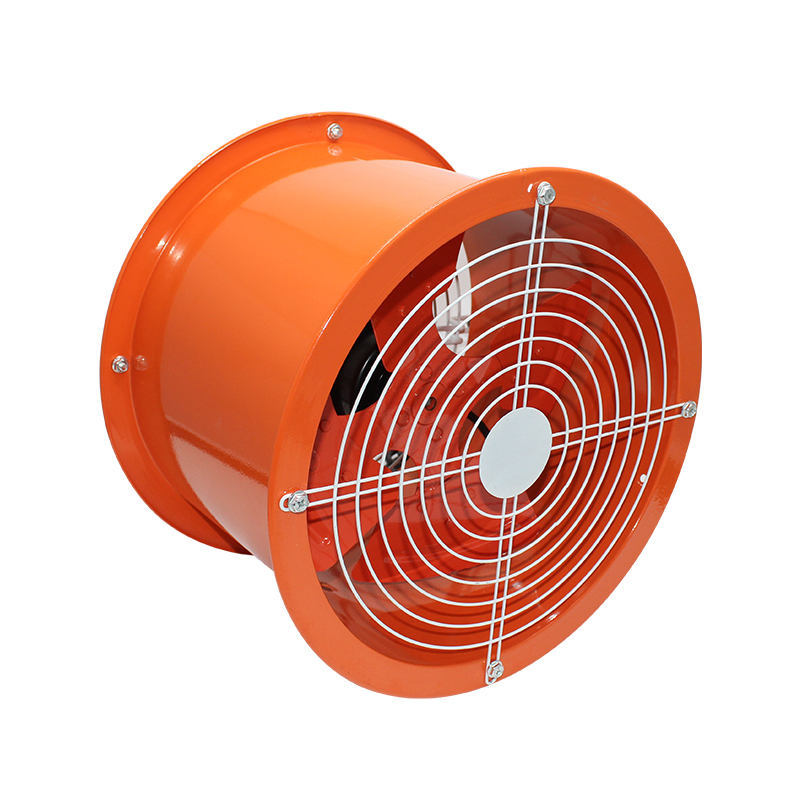
explosion proof axial flow fan requires a synchronized assessment of system resistance (SP) and required volume (CFM). By adhering to rigorousIndustrial fan static pressure calculation guidelines and optimizing the fan selection near the Best Efficiency Point, B2B procurement can secure a solution that guarantees safety compliance, operational stability, and significant energy savings over the fan's lifespan.
Frequently Asked Questions (FAQ)
- Q: What is the main difference between static efficiency and total efficiency for an axial fan?
A: Static efficiency ($\eta_s$) only accounts for the rise in static pressure, ignoring the velocity pressure at the fan outlet, and is typically used for ducted systems. Total efficiency ($\eta_t$) includes both static and velocity pressure, offering a more complete picture of energy conversion, especially useful in general ventilation. - Q: How do B2B specifiers verify the
Explosion proof axial fan efficiency optimization claim during procurement?
A: Specifiers should request the fan's certified performance curve (often AMCA or China Quality certified) and compare the specified operating point's location relative to the published Best Efficiency Point (BEP) on the curve. - Q: What is the risk if my calculated system SP is higher than the fan's maximum rated SP?
A: If the actual system SP is higher, the fan will fail to move the required CFM, resulting in inadequate ventilation and potential safety hazards. The fan will operate in a low-flow, high-pressure, often unstable regime, possibly leading to motor overheating and premature failure. - Q: How does the
Fan performance curve selection criteria industrial address fan noise?
A: Noise generation is lowest when the fan operates near its Best Efficiency Point (BEP). Operating in the unstable stall zone dramatically increases noise due to airflow separation and turbulence. Engineers select the operating point based on BEP and acoustic performance curves provided by the manufacturer. - Q: For
Explosion proof axial flow fan sizing for duct systems , how is the friction loss calculated for a long straight duct?
A: Friction loss is calculated using formulas (like the Darcy-Weisbach or Hazen-Williams equations, often simplified by tables) that account for duct material roughness, duct diameter, length, and the velocity of the air, forming the basis of theIndustrial fan static pressure calculation guidelines .