
 English
 中文简体
中文简体News
Technical Analysis of Blade Geometry in Axial Flow Extractor Fan Performance
Content
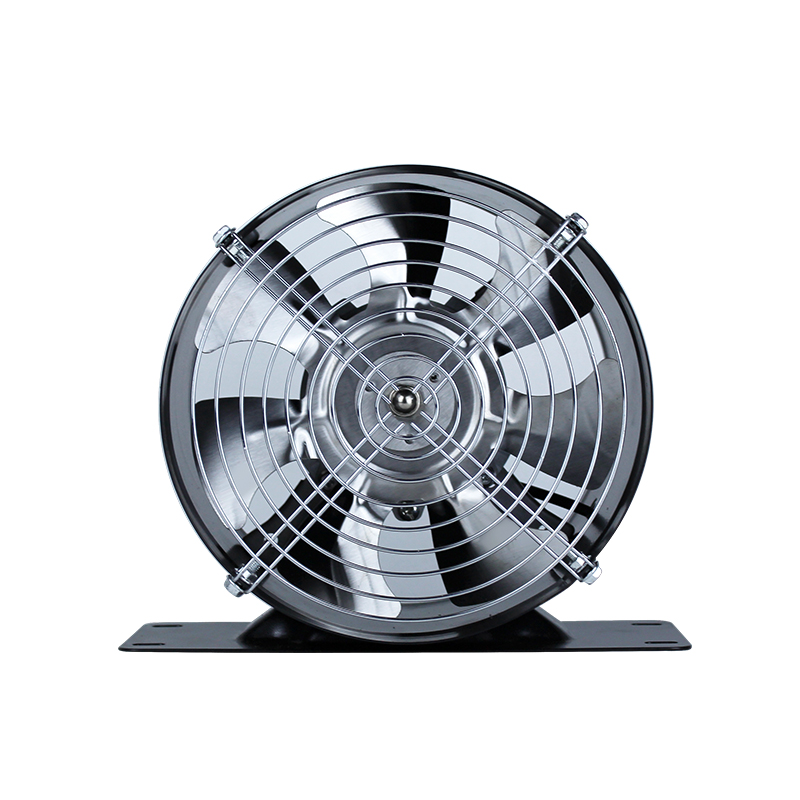
In industrial and commercial ventilation, the aerodynamic efficiency of an axial flow extractor fan is primarily dictated by its impeller configuration. Unlike centrifugal designs, axial systems move air parallel to the shaft, making the blade's angle of attack, twist, and airfoil profile the critical determinants of volumetric flow rate and mechanical longevity. Understanding how these geometric variables influence static pressure is essential for engineers designing exhaust systems for factories, warehouses, and industrial pipelines.
Aerodynamic Impact on Static Pressure and Airflow Velocity
The static pressure vs airflow in axial fans is a fundamental trade-off governed by blade pitch. A steeper blade angle increases the pressure head but requires significantly higher torque from the supporting motor. Advanced aerodynamic blade design for extractor fans utilizes twisted profiles—where the angle is greater at the hub than at the tip—to ensure uniform air velocity across the entire disk area. This prevents backflow and turbulence near the blade tips, which are common points of energy loss in low-tier ventilation units.
When evaluating axial flow extractor fan efficiency, the lift-to-drag ratio of the airfoil section must be optimized. Shengzhou Qiantai Electric Appliance Co., Ltd., located in the "Town of the Motor" in Zhejiang Province, integrates precision-engineered impellers with high-performance motors to achieve optimal pressure curves. By utilizing advanced testing equipment at their Sanjiang Industrial Park facility, they ensure that the blade pitch impact on fan performance meets rigorous industrial requirements for cooling and exhaust applications.
| Design Variable | Low Pitch Angle | High Pitch Angle |
| Static Pressure Capacity | Low (Ideal for free air) | High (Ideal for ductwork) |
| Power Consumption | Low | High |
| Noise Level (dB) | Minimal | Moderate to High |
Mechanical Durability and Structural Integrity
The durability of axial fan blades is tested by the centrifugal forces and vibration frequencies encountered during high-RPM operation. Material selection—ranging from reinforced polymers to die-cast aluminum alloys—determines the axial flow fan blade fatigue life. In environments such as chemical factories or high-moisture kitchens, blades must resist surface erosion and stress corrosion cracking. Shengzhou Qiantai Electric Appliance Co., Ltd. produces a wide range of industrial and supporting motor-based fans that undergo China Quality Certification (CQC) to ensure reliable operation in demanding pipeline and warehouse environments.
- Dynamic Balancing: Essential to prevent bearing wear and structural resonance within the fan housing.
- Material Density: High-strength alloys reduce blade deformation under peak axial flow extractor fan static pressure loads.
- Corrosion Resistance: Specialized coatings are applied to withstand the aggressive exhaust found in industrial kitchens and restaurants.
Which blade material is best for industrial axial fans?
The choice between plastic vs metal axial fan blades depends on the specific operating environment. For general ventilation in homes or offices, glass-fiber reinforced plastic offers a low-inertia, cost-effective solution. However, for industrial axial flow extractor fan use in factories where high temperatures or abrasive particles are present, cast aluminum or stainless steel is required for superior axial fan blade wear resistance. These metal components provide the structural rigidity needed to maintain precise clearances between the blade tip and the venturi ring, which is critical for preventing pressure leakage.
Optimizing Motor-Blade Synchronization
The matching of motor power to axial fan load is an engineering necessity. If the blade design is too aggressive for the motor's torque curve, the system will operate in a "stall" condition, leading to overheating and premature motor failure. Shengzhou Qiantai Electric Appliance Co., Ltd. leverages its strong technical force and independent innovation capabilities to produce axial flow extractor fan systems where the motor and impeller are designed as a synergistic unit. This perfect alignment maximizes energy saving and enhances the overall user experience in diverse cooling systems.
| Application Environment | Required Blade Feature | Engineering Priority |
| Industrial Pipelines | Curved High-Pressure Blades | Overcoming Resistance |
| Warehouse Cooling | Wide-Paddle Large Diameter | Maximum Volume Flow |
| Factory Exhaust | Anti-Corrosive Metal Alloy | Chemical Durability |
How to calculate axial fan pressure requirements?
Engineers must sum the system's total resistance, including duct friction and filter losses. The axial flow fan performance curve provided by the manufacturer is then used to select a fan that operates at its Peak Efficiency Point (PEP). Selecting an energy efficient axial flow fan not only reduces operational costs but also lowers the thermal load on the motor, further extending the axial flow extractor fan durability.
FAQ
How does blade count affect axial fan performance?
Increasing the blade count generally increases the static pressure capability of the fan at the expense of higher power consumption and increased noise. It allows for a more compact design for a given pressure requirement.
What causes an axial fan to stall?
Stall occurs when the airflow is restricted beyond the fan's design limit, causing the air to detach from the blade surface. This results in a significant drop in pressure, increased noise, and vibration.
Can axial flow fans be used in long duct systems?
Axial fans are best suited for low to medium resistance. For very long ducts with high static pressure requirements, specialized high-pressure axial fans or centrifugal fans may be necessary.
How often should axial fan blades be inspected?
In industrial settings, blades should be inspected every 6 to 12 months for dust accumulation, signs of erosion, or hairline fractures to ensure continued safety and efficiency.
Does the housing shape influence the blade's efficiency?
Yes, the tip clearance (the gap between the blade and the housing) is vital. A tighter clearance reduces "tip vortex" losses, significantly improving static pressure and reducing noise.
Technical References
- ISO 5801: Industrial fans — Performance testing using standardized airways.
- AMCA Standard 210: Laboratory Methods of Testing Fans for Aerodynamic Performance Rating.
- CQC (China Quality Certification) Standards for Ventilation and Cooling Equipment.